Your portfolio is more than a collection of projects. In 2026, your portfolio is proof of your skills, your thinking, your growth, and your personality.
If you are a developer, designer, student, freelancer, or career changer, building your own portfolio is one of the smartest things you can do. It gives people one clear place to see what you can build, how you solve problems, and what kind of work you care about.
A résumé tells people what you have done. A portfolio shows them.
And that difference matters.
If you are not sure where to begin, I also wrote a practical guide on three ways to create your portfolio:
Why Build Your Own Portfolio?
Building your own portfolio helps you get discovered, organize your work, practice your skills, and build confidence.
It can support job hunting, freelancing, networking, personal branding, and long-term career growth.
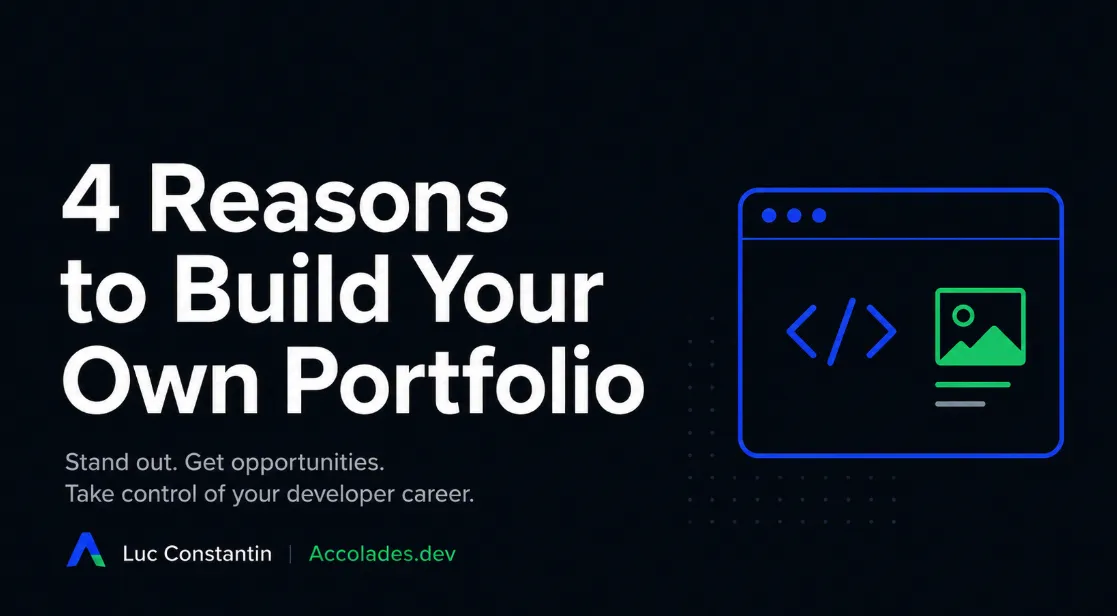
Here are four important reasons to build your own portfolio in 2026.
1. You Get More Exposure
A personal portfolio helps people find you and understand what you do.
Whether you are applying for jobs, looking for freelance clients, connecting with other developers, or sharing your projects online, your portfolio gives people one clear place to learn about you.
Instead of sending five different links, you can send one link that includes your best work, your skills, your story, and your contact information.
Your portfolio can include:
Your best projects
Your GitHub profile
Your résumé or CV
Your contact details
Your technical skills
Your case studies
Your writing or tutorials
Your social links, such as LinkedIn
You can connect with me on LinkedIn here:
This matters because people are busy. Recruiters, clients, and collaborators do not want to guess what you can do. A strong portfolio helps them see it quickly.
2. It Helps You Build Confidence and Self-Awareness
A portfolio is not only for other people. It is also for you.
When you build your own portfolio, you start to notice your growth. You can look back at old projects and see how far you have come. You can compare what you knew last year with what you know now.
That is powerful.
Many developers feel like they are not improving fast enough. But when your work is organized in one place, progress becomes easier to see.
Your portfolio can help you answer important questions:
What am I good at?
What skills am I still improving?
What kind of projects do I enjoy building?
What problems do I like solving?
What should I learn next?
You can also ask other developers, mentors, or potential clients for feedback. That feedback can help you improve your design, code, writing, and project presentation.
Over time, your portfolio becomes a record of your progress. It shows the journey, not just the final result.
3. It Keeps You Organized
If you are self-taught, studying, freelancing, or learning while working, it is easy for projects to get scattered everywhere.
One project is on GitHub. Another is saved locally. Another is half-finished. Another is live, but you forgot to write a description for it.
Relatable? Very.
A portfolio helps you bring everything together.
It gives you a home for your work, goals, skills, and achievements. It also forces you to think clearly about what you want to show.
A good portfolio can organize:
Completed projects
Case studies
Technologies used
Project screenshots
Live demo links
Source code links
Learning goals
Career direction
This helps you stay focused. It also makes it easier to update your work later, especially when you apply for a role or pitch a client.
4. It Helps You Apply What You Are Learning
Building your own portfolio is one of the best ways to practice.
You get to use real skills in a real project. You make decisions about layout, colors, typography, accessibility, performance, copywriting, responsive design, and deployment.
That is different from only watching tutorials.
A portfolio gives you a real reason to build something from start to finish. You are not just learning concepts. You are applying them.
Depending on your level, your portfolio can help you practice:
HTML and CSS
JavaScript
React, Vue, Astro, Next.js, or another framework
Responsive design
Accessibility basics
SEO fundamentals
Performance optimization
Content writing
Deployment with GitHub Pages, Netlify, Vercel, or another host
The best part is that your portfolio can grow with you. Your first version does not need to be perfect. It just needs to exist.
Should You Use AI to Build Your Portfolio?
Yes, you can use AI to help build your portfolio. But AI should support your thinking, not replace it.
In 2026, AI tools can help you brainstorm ideas, write first drafts, improve project descriptions, check code, fix grammar, and organize your content.
But your portfolio still needs to sound like you.
It should show your real skills, your decisions, your taste, your progress, and your personality.
Why Use AI for Your Portfolio?
AI can save time and help you get unstuck.
It is useful when you need help with repetitive, unclear, or time-consuming tasks.
You can use AI to:
Brainstorm portfolio layout ideas
Write a first draft of your about section
Improve project descriptions
Check grammar and clarity
Generate simple code snippets
Debug small errors
Create SEO titles and meta descriptions
Turn messy notes into clean case studies
Create image alt text
Plan your portfolio structure
AI is especially helpful when you already know what you want to say but need help making it clearer.
How to Use AI the Right Way
Use AI as a helper, not as the author of your entire portfolio.
A good workflow looks like this:
Write your own rough idea first.
Ask AI to improve the structure, clarity, or grammar.
Edit the result so it sounds like you.
Check every technical suggestion before using it.
Test your code, links, layout, and page speed yourself.
For example, you can ask AI to help rewrite a project description. But you should still explain what you built, why you built it, what problem you solved, what tools you used, and what you learned.
That is what makes the project real.
When Not to Use AI
There are times when AI can hurt more than it helps.
Do not use AI when you are learning the basics and need to understand the code yourself.
Do not use AI when the content needs to be deeply personal.
Do not use AI when you are writing about your real experience, struggles, or lessons learned.
Do not use AI when you cannot verify the code or advice it gives you.
Do not use AI to copy a full portfolio without understanding how it works.
Do not use AI to make your portfolio sound like every other portfolio online.
Your portfolio should not feel like a generic template filled with generic words. People can sense that.
Use AI to support your work, but let your own voice and judgment lead.
The key idea is simple: AI can be your assistant, but you are still the developer.
What Should Your Portfolio Include in 2026?
A strong portfolio does not need dozens of sections. It needs the right sections.
Start with these:
A clear headline that says who you are and what you do.
A short about section that explains your background, interests, and goals.
Three to six strong projects.
Project details that explain the problem, solution, tools used, and what you learned.
Live demo links and source code links.
Contact information.
Social proof, such as LinkedIn, GitHub, testimonials, or writing.
You do not need to make it complicated. A simple, fast, well-written portfolio is better than a fancy one that never gets finished.
My Personal Experience Building a Portfolio
When I built my own portfolio, it started as a small personal challenge.
It took around 10 hours spread across 10 days.
That was enough to practice, make decisions, organize my work, and learn by doing.
The biggest benefit was not only the final website. The process itself helped me understand what I knew, what I still needed to improve, and how I wanted to present my work.
That is why I recommend building your own portfolio, even if it is simple at first.
You learn a lot by making something that represents you.
Final Thoughts
Building your own portfolio in 2026 is still one of the best moves you can make as a developer or creator.
It helps you get exposure, build confidence, stay organized, and apply what you are learning in a real project.
Start small. Keep it clear. Add your best work. Update it as you grow.
Your portfolio does not need to be perfect. It needs to be real, useful, and easy to understand.
Ready to start? Read this next: